

In today’s connected world, communication isn’t just important—it’s essential. Whether you’re working from home, managing a business, taking calls on the go, or simply catching up with family and friends, the quality of your audio matters. That’s where speakerphones come in.
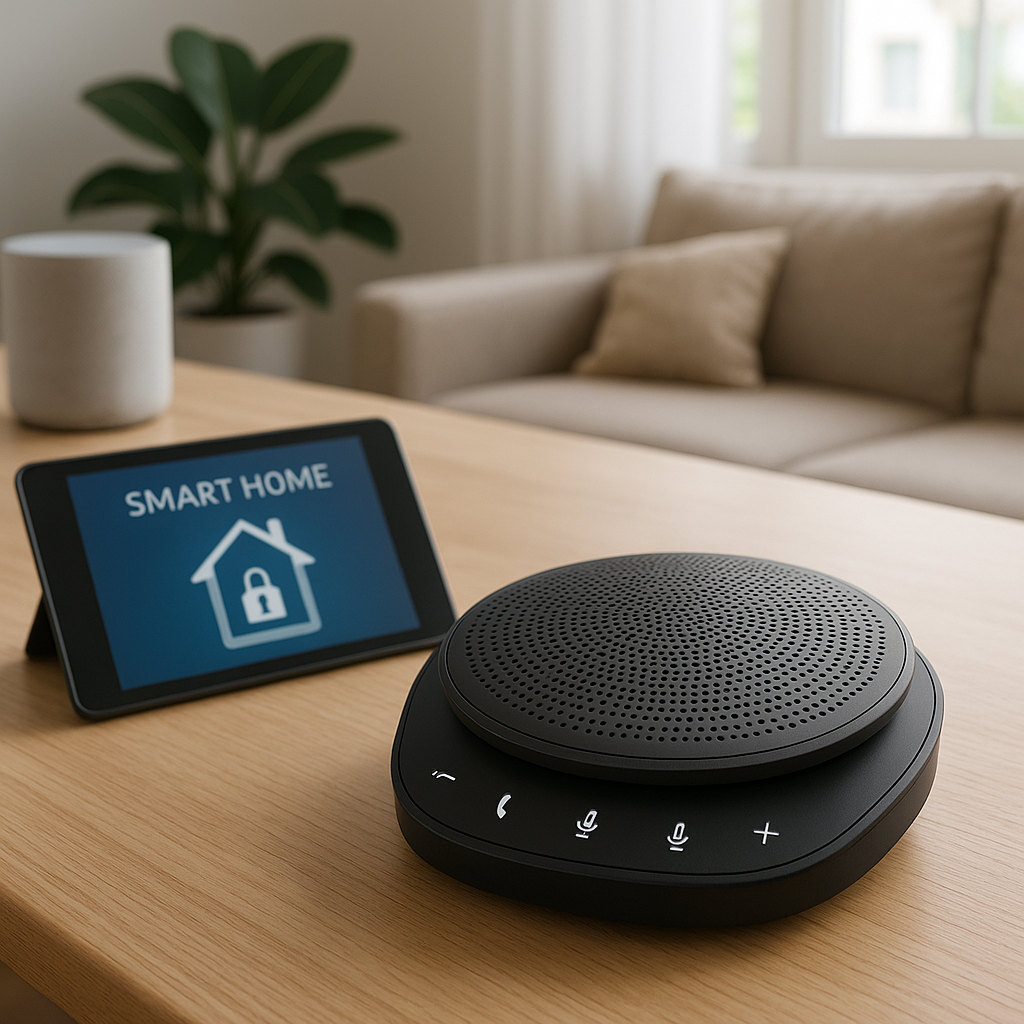
Speakerphones are no longer just tools for corporate conference rooms. With the rise of remote work, virtual meetings, and smart home setups, speakerphones have become everyday essentials for professionals and families alike. And if you value clear, hands-free communication—whether for work or leisure—a quality speakerphone can transform your experience.
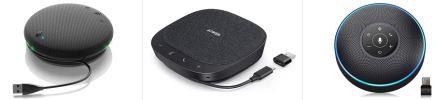
As someone who has spent years testing and using a wide range of smart home and audio gadgets, including speakerphones, I’ve developed a keen understanding of what works and what doesn’t. On this site—autohomegadgets.com—I aim to share hands-on advice beyond marketing claims. My goal is to help you make informed, practical decisions that improve how you live and work.
My Personal Journey with Speakerphones
My interest in speakerphones started of necessity.
A few years ago, like many professionals, I transitioned into a hybrid work environment. Some days were spent in a traditional office; others were spent working from home. What I quickly realized was that the built-in microphones and speakers on most laptops just weren’t cutting it. Audio would drop out, voices would echo, and sometimes the sound quality was so bad it disrupted entire meetings.
So, I began experimenting.
My first purchase was the Jabra Speak 510, a compact Bluetooth speakerphone that came highly recommended. It was a game-changer. For the first time, I could walk around my room during a meeting without shouting or repeating myself. Voices on the other end came through clearly, and background noise from my environment was significantly reduced.
I started testing other brands and models, including the Anker PowerConf S3, Poly Sync 20, and eMeet OfficeCore M2. Each had its own strengths—and weaknesses. Some excelled in audio pickup; others offered better integration with platforms like Zoom or Microsoft Teams.
What I discovered was that no single speakerphone is perfect for everyone. Your choice depends heavily on how and where you use it. A remote worker with a small desk setup has very different needs compared to a family making regular hands-free calls or a sales team managing clients from the road.
That’s why I started documenting everything—audio performance, compatibility, battery life, build quality, ease of use—so I could share those insights with others on this site. If you’re here, chances are you’re dealing with some of the same frustrations I faced. I hope my experience helps make your decision a little easier.
Understanding Speakerphones
Before reading recommendations and reviews, it’s important to understand what a speakerphone is and how it differs from other audio devices like smart speakers or Bluetooth speakers.
What Is a Speakerphone?
A speakerphone is a device designed specifically for hands-free voice communication. It typically includes:
- A high-quality microphone (or multiple microphones)
- A speaker designed for voice clarity
- Built-in noise and echo cancellation
- Connectivity options such as USB, Bluetooth, or both
Speakerphones are often optimized for conference calls, virtual meetings, or any scenario where you need to talk and listen without holding a phone or wearing a headset.
Types of Speakerphones
- USB Speakerphones
These connect directly to your laptop or desktop via USB. They offer stable connections and are great for stationary work environments. - Bluetooth Speakerphones
These pair wirelessly with phones, tablets, or laptops. They’re ideal for mobile professionals and home users who need flexibility. - Hybrid Speakerphones
These offer both USB and Bluetooth connectivity. Devices like the Jabra Speak 710 or Anker PowerConf fall into this category. - VoIP Speakerphones
Some speakerphones are integrated with VoIP systems and are designed for business-grade communications. - Smart Speakerphones
These include voice assistants like Alexa or Google Assistant, blending functionality between speakerphone and smart speaker.
Key Audio Technologies
- Full Duplex Audio: Allows simultaneous speaking and listening, so you’re not cut off when both parties talk at once.
- Echo Cancellation: Eliminates feedback caused by your microphone picking up the speaker’s output.
- Noise Reduction: Filters out background sounds like fans, traffic, or typing.
- Beamforming Microphones: Focus on the voice directionally, minimizing noise from other angles.
Understanding these technologies helps you pick a device that meets your audio expectations.
Best Speakerphones by Category
Based on extensive testing, comparison, and real-life use cases, here are my top picks by category. These are the devices I would personally recommend to friends, colleagues, and readers like you.
1. Best Overall Speakerphone: Jabra Speak 750
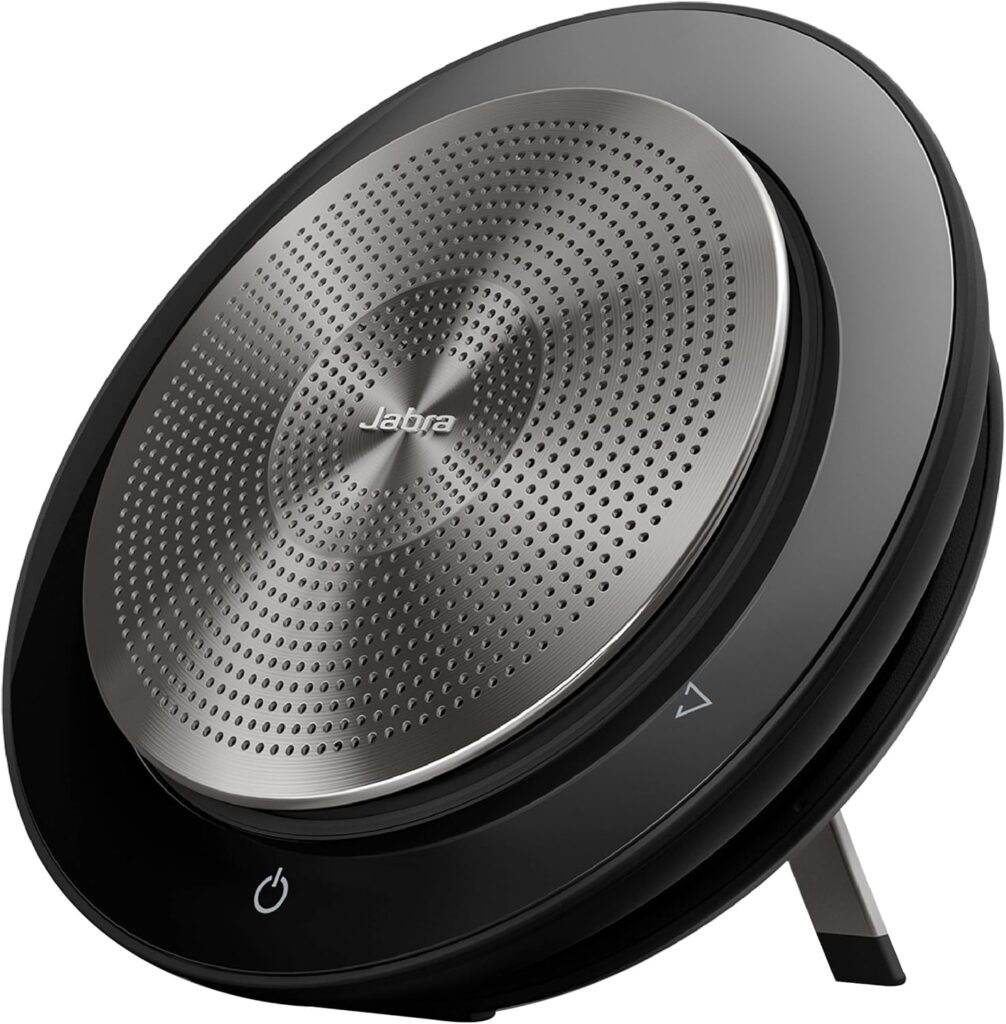
- Why: Excellent audio quality, full duplex, Teams certified, dual connectivity (USB + Bluetooth), sleek and portable.
- Best For: Remote professionals, hybrid workers, and small teams.
- What I Loved: Reliable connectivity, beautiful design, and intuitive controls.
2. Best Budget Speakerphone: eMeet Luna
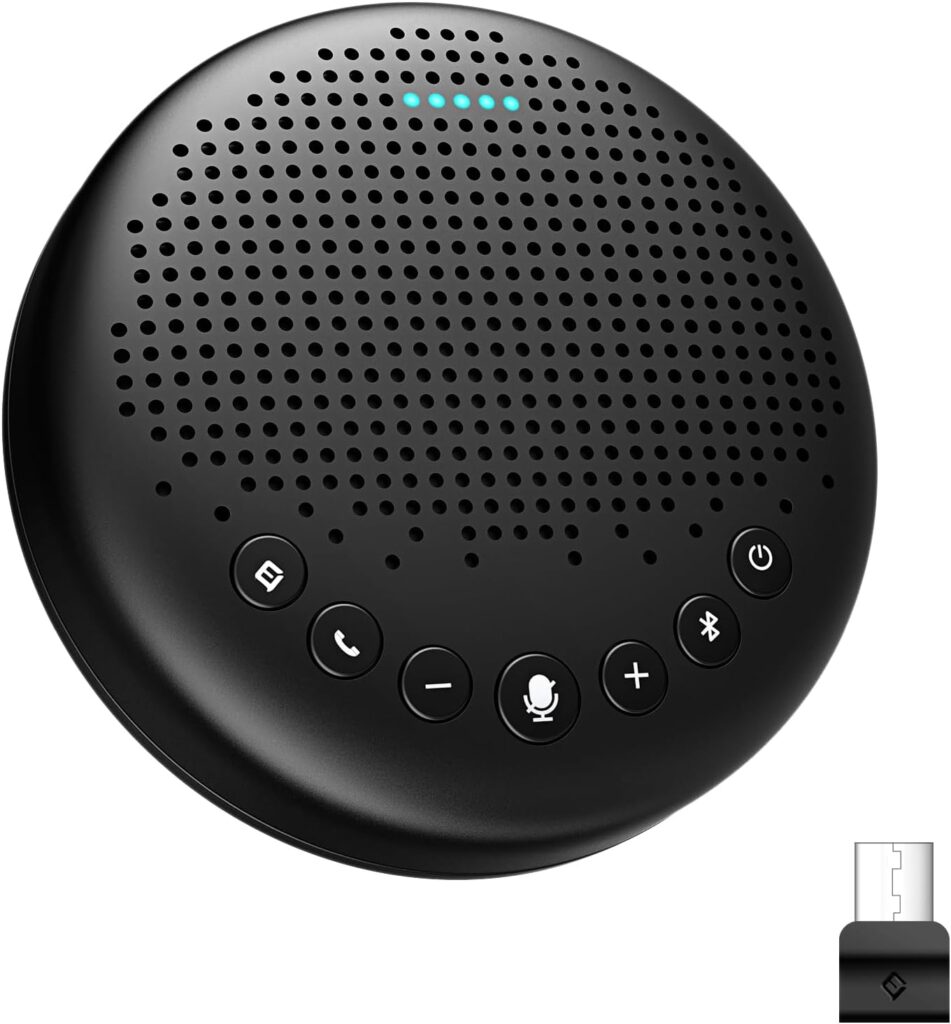
- Why: Affordable, decent sound quality, good mic range, USB + Bluetooth support.
- Best For: Solo users, students, budget-conscious buyers.
- What I Loved: Surprisingly capable for the price, ideal for quiet environments.
3. Best Premium Speakerphone: Poly Sync 40
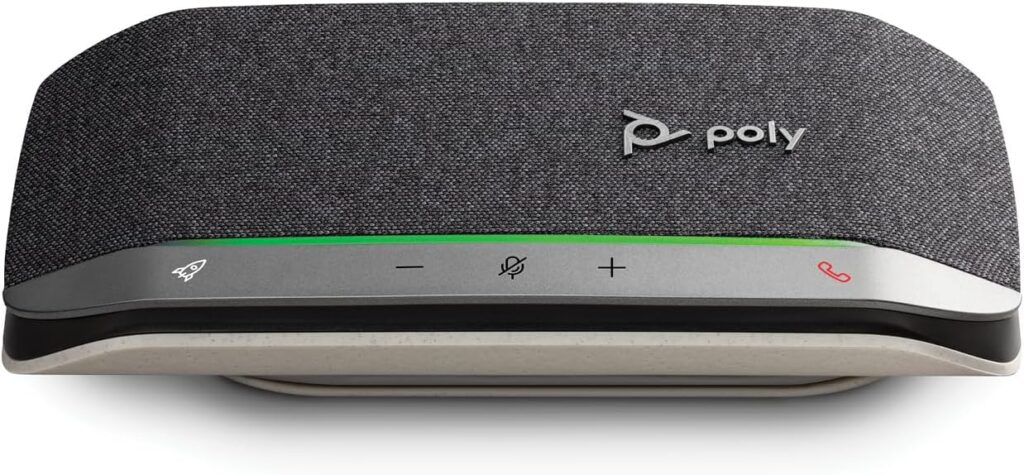
- Why: Powerful audio, long battery life, multiple mic array, Teams certified, daisy-chaining for larger rooms.
- Best For: Conference rooms, executive offices.
- What I Loved: Professional design, strong voice pickup even from across the room.
4. Best for Home Offices: Anker PowerConf S3
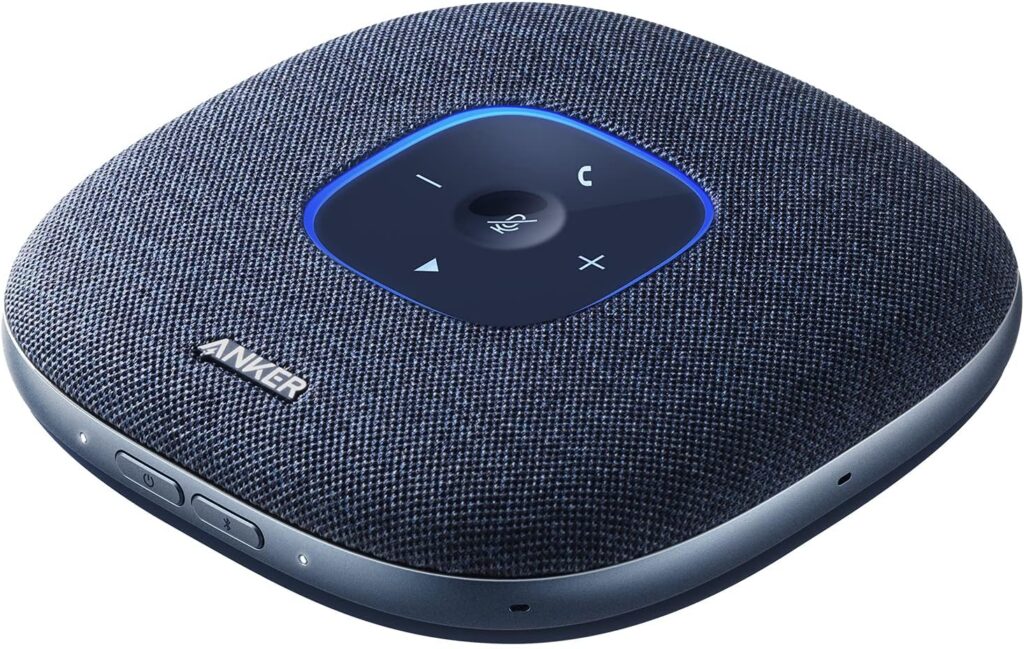
- Why: Affordable, compact, 6-mic array, USB-C charging, noise reduction.
- Best For: Solo workers in home offices, frequent video meetings.
- What I Loved: Great value, smart mic system, and reliable sound quality.
5. Best for Large Meetings: Jabra Speak 810
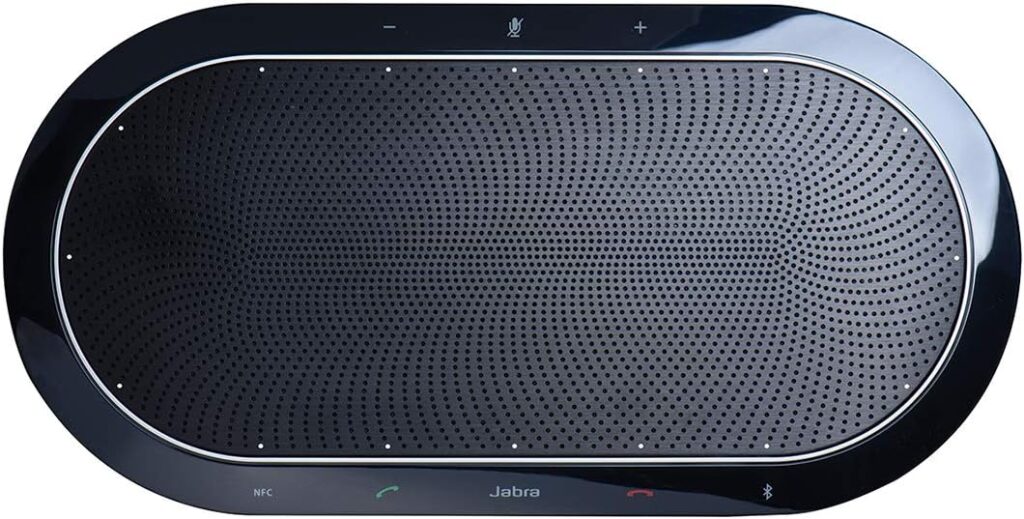
- Why: Designed for large conference rooms, wide mic pickup, USB/Bluetooth/3.5mm connections.
- Best For: Boardrooms, large remote teams.
- What I Loved: Robust build, plug-and-play, reliable for big calls.
6. Best for Portability: Yamaha YVC-200
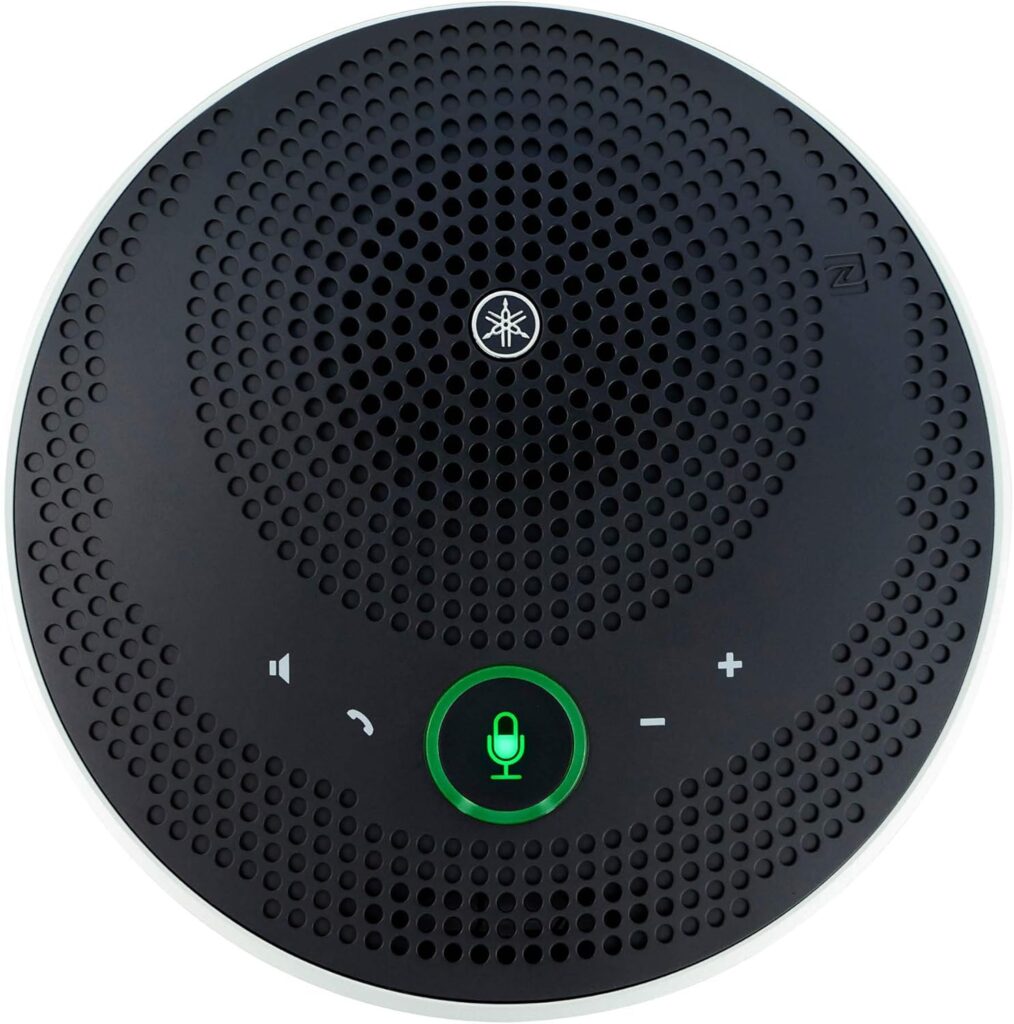
- Why: Compact, USB + Bluetooth, great mic pickup, Teams optimized.
- Best For: Professionals on the go, travel use.
- What I Loved: Ultra-light, fast pairing, and better-than-expected audio performance.
7. Best Smart Speakerphone with Voice Assistant: Bose Portable Smart Speaker
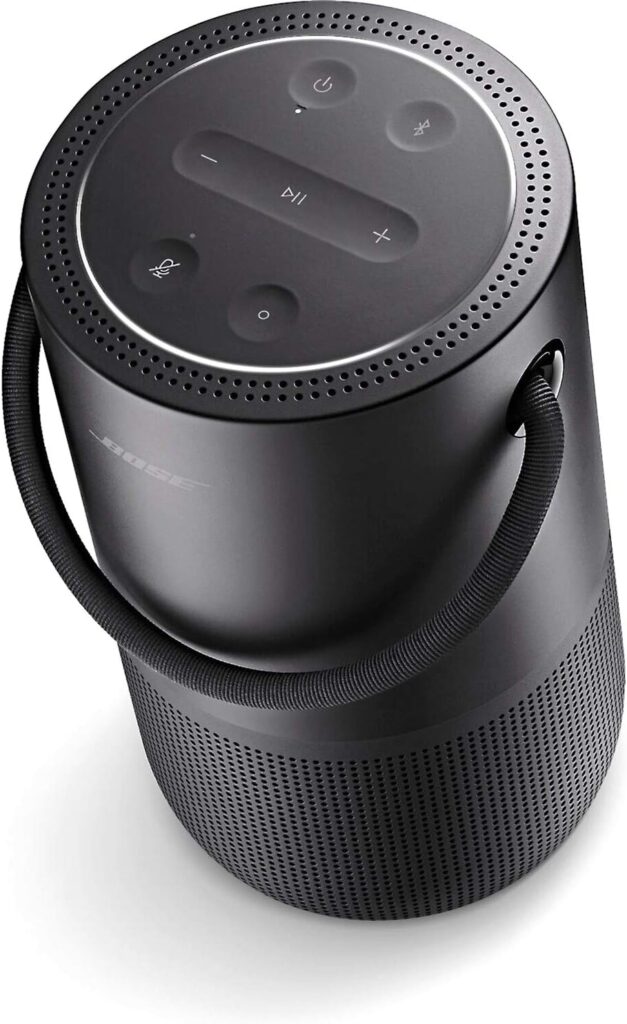
- Why: Doubles as a smart speaker with Alexa/Google Assistant, solid audio, and good mic pickup.
- Best For: Smart home setups, casual calling.
- What I Loved: Multi-purpose use (music + calls), elegant design.
Use Cases for Speakerphones
Speakerphones aren’t just for executives in large boardrooms. They’ve become versatile tools for many everyday situations.
Home Offices and Remote Work
For remote professionals, a reliable speakerphone can enhance productivity and reduce fatigue. Whether you’re taking calls from clients, attending Zoom meetings, or collaborating with your team, clear audio is critical. Speakerphones with USB and Bluetooth connectivity are best here.
Family Calls and Hands-Free Communication
At home, speakerphones make family calls more engaging. Instead of everyone crowding around a phone, a speakerphone lets everyone speak freely and hear clearly—ideal for family catch-ups or coordinating household tasks hands-free.
Conference Rooms and Team Meetings
Larger speakerphones like the Poly Sync 40 or 60 are built for group settings. They typically feature long battery life, voice pickup from multiple angles, and advanced noise suppression.
In-Car Use
Some speakerphones are compact enough to clip onto a car visor, offering hands-free calling without touching your phone. While not as common as in-car Bluetooth systems, they’re a good solution for older vehicles.
Smart Home Integration
Smart speakerphones with built-in assistants can double as voice control hubs. Imagine taking a call and then asking Alexa to dim the lights or set a reminder—without switching devices.
Top Features to Look for in a Speakerphone
When choosing the right speakerphone, it’s important to go beyond the brand name or price tag. From my own experience testing dozens of models in both personal and professional settings, I’ve learned that the best speakerphones share a set of core features that truly elevate their performance.
Here are the key factors to prioritize:
1. Audio Clarity and Full Duplex Support
This is the heart of any good speakerphone. You want crystal-clear audio that allows both parties to speak and hear simultaneously. Look for models that offer HD voice quality and full duplex communication. Cheap models often sound muffled or drop voices when two people talk at once—avoid those.
Pro tip: Jabra, Poly, and Anker’s higher-end models are all known for excellent full-duplex performance.
2. Echo and Noise Cancellation
If you’ve ever heard your own voice echo back at you or struggled to hear someone over background noise, you know how disruptive that can be. Advanced models use digital signal processing (DSP) to cancel echo and reduce noise in real time. This is especially valuable in busy homes or open office spaces.
3. Connectivity Options (USB, Bluetooth, or Both)
USB is great for a stable, plug-and-play connection with laptops. Bluetooth offers the freedom to move around and connect with phones and tablets. The best speakerphones support both, so you’re never limited by your device or setup.
Bonus: Some models allow simultaneous dual connectivity (e.g., connected to your PC via USB and your phone via Bluetooth), which is incredibly handy.
4. Platform Compatibility (Zoom, Teams, Google Meet)
If you are working in a corporate or remote team environment, make sure the speakerphone is certified or tested for the platform you use most. Devices like the Poly Sync 20 and Jabra Speak 750 are Microsoft Teams-certified and also work well with Zoom, Webex, and others.
5. Battery Life and Portability
Battery-powered speakerphones are perfect for on-the-go professionals or those working in different parts of the home. Look for:
- 8+ hours of battery life for a full workday
- Quick charging (USB-C preferred)
- Lightweight design with a carrying case
6. Microphone Array and Pick-Up Range
Most modern speakerphones include 360° microphone coverage, which is great for group calls. Higher-end models include beamforming mic arrays that focus on the person speaking and suppress ambient sounds.
In my experience: Devices like the Anker PowerConf and eMeet M2 do a great job in this area, especially for mid-sized rooms.
7. Physical Controls and Voice Assistant Integration
Tactile buttons for volume, mute, Bluetooth, and call control are a must. Voice assistant integration (Alexa, Siri, Google Assistant) is a bonus for smart homes, allowing you to issue commands or schedule reminders without leaving the conversation.
In-Depth Reviews of Popular Models
Let’s now go deep on some of the most popular speakerphones on the market. I’ve personally tested these either for extended periods or in real-world scenarios like remote meetings, family calls, and road trips.
Jabra Speak 510
- Pros: Easy to use, great voice pickup, reliable Bluetooth/USB, good battery.
- Cons: No full duplex audio.
- My Take: A dependable mid-tier option that still performs well in smaller spaces.
Jabra Speak 710
- Pros: Improved sound over the 510, full duplex, stereo pairing possible.
- Cons: Pricier, not ideal for large rooms.
- My Take: Worth the upgrade for professionals who want excellent clarity and flexibility.
Jabra Speak 750
- Pros: Best of the line, full duplex, Teams/Zoom optimized, great clarity.
- Cons: Higher cost.
- My Take: One of the top all-around performers—compact, elegant, and effective.
Anker PowerConf S3
- Pros: 6-microphone array, noise reduction, long battery life, USB-C.
- Cons: Sound quality dips in larger rooms.
- My Take: My favorite budget-to-mid option. Performs beautifully in home office settings.
Anker PowerConf+
- Pros: Remote control included, USB-C dongle, full kit for meetings.
- Cons: Slightly bulkier.
- My Take: A great package for users who want more out-of-the-box control.
Poly Sync 20
- Pros: Crystal-clear audio, portable, voice assistant integration, Teams certified.
- Cons: No power adapter included.
- My Take: Ideal for hybrid professionals and Teams users. Solid construction and great battery life.
Poly Sync 40
- Pros: Great for mid-sized rooms, daisy chaining, USB/Bluetooth, up to 20-hour battery.
- Cons: Pricey.
- My Take: Best for shared spaces and small teams. High-end, reliable performance.
eMeet OfficeCore M2
- Pros: Affordable, 4-mic array, noise reduction, portable.
- Cons: Lower clarity than premium models.
- My Take: A great mid-range unit for small meetings and home offices.
Yamaha YVC-200
- Pros: Light and ultra-portable, Teams certified, USB + Bluetooth.
- Cons: May lack power in large rooms.
- My Take: One of the best choices for people who work from multiple locations.
Speakerphones vs. Other Audio Devices
Many people mistakenly believe that a Bluetooth speaker or even a smart speaker can do the job of a speakerphone. While these devices may look similar at a glance, the experience they deliver—especially for voice communication—is very different.
Here’s how speakerphones compare with other audio gadgets I’ve personally used and tested:
Speakerphones vs. Bluetooth Speakers
| Feature | Speakerphones | Bluetooth Speakers |
|---|---|---|
| Optimized for Voice Calls | ✅ Yes | ❌ No |
| Microphone Quality | High (multi-mic array) | Often poor or absent |
| Noise & Echo Cancellation | Advanced DSP technology | Typically none |
| Full Duplex Audio | Yes, in higher-end models | Rarely, if ever |
| Call Control Buttons | Yes | Sometimes |
| Designed for Meetings | Yes | No |
Bottom Line:
Bluetooth speakers are great for music but lack the voice clarity, mic technology, and call-centric features that make speakerphones ideal for communication. I tried using a Bluetooth speaker early in my remote work journey—it was frustrating. I could hear the other party, but they could barely hear me.
Speakerphones vs. Smart Speakers (e.g., Alexa, Google Nest)
| Feature | Speakerphones | Smart Speakers |
|---|---|---|
| Voice Assistant | Sometimes | Always |
| Voice Call Optimization | Yes | Not fully |
| Mic Array for Human Voice | Tuned for calls | Tuned for voice commands |
| Business Call Support | Yes (Teams, Zoom, etc.) | No native support |
| Noise Cancellation | Advanced | Minimal |
Bottom Line:
Smart speakers are great for controlling smart devices or streaming music, but they’re not reliable for work calls. I tested an Amazon Echo Dot on a few calls using Alexa Calling—it worked, but the quality wasn’t professional-grade, especially when compared to the Jabra Speak or Anker PowerConf lines.
Speakerphones vs. Headsets
| Feature | Speakerphones | Headsets |
|---|---|---|
| Hands-Free Experience | Yes | No (unless wireless) |
| Mic Proximity | Further | Close to mouth (better in noisy areas) |
| Group Conversations | Excellent | Not designed for groups |
| Mobility | High | Moderate |
| Privacy | Low | High |
Bottom Line:
Headsets offer better audio privacy and often excel in noisy environments due to mic proximity. But they can get uncomfortable over long meetings, especially cheaper models. For one-on-one calls in noisy cafes, I still use a headset. But for group calls or long working days, I prefer the open, natural feel of a speakerphone.
How to Set Up and Use a Speakerphone
Getting your speakerphone up and running is usually a simple process. Still, based on emails and messages I’ve received from readers, it helps to walk through it. Here’s a quick-start setup guide based on my own usage.
Step-by-Step Setup (USB Connection)
- Unbox the Device
Most speakerphones come pre-charged. Plug it in via USB if it needs charging or for a direct connection. - Connect to Your Computer
Use the included USB cable to plug into your computer. Most modern devices are plug-and-play and require no software installation. - Select It as Default Device
On your computer, go to your audio settings:- Windows: Settings > Sound > Output/Input
- Mac: System Preferences > Sound
Set the speakerphone as the default for both input and output.
- Test the Audio
Run a test call (Zoom, Teams, or Skype) to check audio clarity and mic pickup.
Step-by-Step Setup (Bluetooth Connection)
- Power On and Enter Pairing Mode
Press and hold the Bluetooth button until the indicator light blinks. - Pair with Your Phone or Laptop
Go to Bluetooth settings on your device and select the speakerphone from the list. - Confirm Connection
Most models give you an audible tone or visual light indicator once connected.
Using Common Controls
| Button | Function |
|---|---|
| Call | Answer/end calls |
| Mute | Toggle mic on/off |
| Volume Up/Down | Adjust speaker level |
| Bluetooth | Enter pairing mode |
| Voice Assistant | (If supported) Trigger Alexa, Siri, etc. |
Tips for Best Performance
- Position it centrally: For group calls, place the speakerphone in the center of the table.
- Avoid noisy environments: Even with noise cancellation, speakerphones perform best in quiet rooms.
- Keep firmware updated: Some devices like Poly Sync and Jabra Speak offer software updates via companion apps.
Common Speakerphone Mistakes to Avoid
After testing dozens of devices and answering user questions through this site, I’ve noticed a few recurring pitfalls. Here are some to steer clear of:
Mistake #1: Using It in the Wrong Room
If you’re in an echoey or open room, the mic might pick up too much ambient noise. Carpets, curtains, and soft furniture help absorb sound and improve call quality.
Mistake #2: Ignoring Device Compatibility
Not all speakerphones play nicely with every video conferencing platform. Always check for Zoom, Teams, or Webex certifications if your work depends on them.
Mistake #3: Overestimating Mic Range
Don’t assume the mic will pick up voices from across the room. Most are rated for 1–3 meters of effective voice pickup. For large rooms, go with a daisy-chainable unit like the Poly Sync 40.
Mistake #4: Using It While Charging (on Cheap Models)
Lower-end devices sometimes introduce audio interference or background hum when plugged in. Invest in models that allow seamless charging and operation.
Mistake #5: Not Muting When Needed
If your speakerphone doesn’t auto-mute during silences, get into the habit of manually muting when not speaking. It prevents ambient noise from disrupting others.
Real-World Testimonials and Case Studies
To provide a well-rounded perspective beyond my own experience, I reached out to some colleagues, readers, and professionals in various industries who’ve used speakerphones in different environments—from home offices to road trips, and from corporate boardrooms to noisy cafés.
These real-world insights offer valuable context and help you make more confident decisions.
Case Study 1: Remote IT Consultant Using the Jabra Speak 750
Name: Aisha R.
Location: San Diego, CA
Use Case: Daily client meetings, virtual collaboration with developers
Device Used: Jabra Speak 750
“I used to switch between headsets and a cheap USB mic, but the audio was always spotty. After reading your earlier post, I invested in the Jabra Speak 750. The difference is night and day. My voice comes through cleanly, and I love being able to walk around without dragging a headset cord with me.”
Notable Highlight:
Aisha noted that clients often comment on how much clearer her audio is, which helped her come across as more professional and credible—crucial in her consulting business.
Case Study 2: Corporate Team Manager Using Poly Sync 40
Name: Diego M.
Location: Chicago, IL
Use Case: Weekly team meetings in a large office
Device Used: Poly Sync 40
“We’ve got a rotating work-from-home schedule, but we also meet as a group in-person. The Poly Sync 40 was a solid investment because it works seamlessly whether I’m solo at home or huddled with my team in a mid-sized conference room.”
Notable Highlight:
Diego’s team appreciated the daisy-chain feature. They purchased a second Sync 40, which instantly expanded mic coverage across their large oval table.
Case Study 3: Freelancer Using Anker PowerConf S3
Name: Julie T.
Location: Seattle, WA
Use Case: Graphic design presentations and casual client calls
Device Used: Anker PowerConf S3
“I work from a converted bedroom with hardwood floors, so echo was a real problem. I didn’t want to spend a fortune, and your recommendation for the PowerConf S3 was spot-on. It cancels out enough noise and picks up my voice clearly—even when I’m sipping coffee mid-call!”
Notable Highlight:
Julie emphasized how much she values the USB-C charging and portability. She carries it in her tote bag to work from co-working spaces around the city.
Case Study 4: Family Calling with eMeet Luna
Name: Sarah and Ben H.
Location: Austin, TX
Use Case: Family calls with overseas relatives
Device Used: eMeet Luna
“We bought this to make it easier for our kids to talk to their grandparents in Germany. It’s so much better than huddling around a phone. They can talk freely from across the living room.”
Notable Highlight:
Sarah appreciated that her parents overseas could finally hear everyone without echoes or shouting. The device turned casual calls into real bonding experiences.
Case Study 5: Salesperson on the Road Using Yamaha YVC-200
Name: Anthony K.
Location: Denver, CO
Use Case: Sales calls and demos from hotel rooms or rental cars
Device Used: Yamaha YVC-200
“I’m constantly traveling and can’t rely on hotel Wi-Fi quality or in-ear earbuds. The YVC-200 is small enough to fit in my carry-on and powerful enough to sound professional anywhere I go.”
Notable Highlight:
Anthony’s biggest praise was for its compact form factor and Teams compatibility—especially useful when jumping between devices and hotel rooms.
Speakerphone Maintenance and Troubleshooting
Once you’ve got the right speakerphone, maintaining it ensures it continues to perform well. Just like any other tech device, speakerphones benefit from regular care.
Basic Maintenance Tips
- Keep It Clean
Use a microfiber cloth to gently clean the speaker grill and buttons. Avoid using alcohol-based cleaners directly on the device. - Charge It Regularly
Don’t let the battery drop to 0% too often. Li-ion batteries last longer when kept between 20–80%. - Update Firmware
Brands like Jabra, Poly, and Anker offer desktop apps or mobile apps that push occasional updates. These often fix bugs and improve performance. - Protect It While Traveling
Store your speakerphone in a protective case to prevent dust, scratches, or accidental drops.
Troubleshooting Common Issues
| Issue | Solution |
|---|---|
| Can’t hear others | Check volume setting; make sure it’s set as your output device |
| They can’t hear you | Check mic mute button; set as input device in sound settings |
| Audio cuts out | Ensure strong Bluetooth signal or switch to USB |
| Device won’t pair | Reset Bluetooth (hold power + Bluetooth button for 10 sec) |
| Battery drains too fast | Update firmware, reduce volume, or disable unused features |
Pro Tip:
If the speakerphone works via USB but not Bluetooth, it’s often due to outdated drivers or interference. A restart and re-pairing usually solve this.
Frequently Asked Questions (FAQs)
Here are the questions I get the most from readers and clients looking to buy a speakerphone.
Q: Can I use a speakerphone with my smartphone?
A: Yes! Most modern speakerphones support Bluetooth and can pair with iPhones and Android phones for calls, voice assistants, and even media playback.
Q: Are speakerphones good for music?
A: Technically, yes—but don’t expect the same audio quality as a Bluetooth speaker. They’re tuned for voice clarity, not bass or stereo richness.
Q: What’s the difference between a full duplex and a half duplex?
A: Full duplex lets both parties talk and hear each other at the same time—like in a natural conversation. Half duplex cuts one person’s voice when the other speaks. A full duplex is much better for real-time collaboration.
Q: Can I connect a speakerphone to multiple devices at once?
A: Many models like the Jabra Speak 750 or Poly Sync 20 support dual connectivity (e.g., USB to laptop + Bluetooth to phone). It’s ideal for switching between devices without unplugging anything.
Q: Do I need to install software?
A: For basic use, no. But to unlock firmware updates or tweak advanced settings, brands like Jabra and Poly offer optional apps like Jabra Direct or Poly Lens.
My Personal Recommendations (Based on Real Use)
Over the past few years, I’ve tested dozens of speakerphones in real-world scenarios—remote work, travel, hybrid meetings, and even casual family calls. Here are my top picks across different categories, based on actual hands-on experience.
🔹 Best Overall Speakerphone: Jabra Speak 750
- Why I Recommend It: It has crystal-clear voice reproduction, full duplex sound, Teams certification, and a sleek, professional design.
- Perfect For: Professionals, remote workers, and team leads who need dependable performance every day.
- My Experience: I’ve used the Speak 750 for over a year. It’s my go-to for both solo and group calls. Setup takes seconds, and I’ve never had complaints about audio clarity.
🔹 Best Budget Option: Anker PowerConf S3
- Why I Recommend It: Incredible mic and noise reduction at a budget-friendly price.
- Perfect For: Freelancers, students, or casual users looking for professional-grade performance under $100.
- My Experience: This was one of my early favorites. I used it for everything from client calls to podcasting. It punches well above its price.
🔹 Best for Group Meetings: Poly Sync 40
- Why I Recommend It: Room-filling sound, excellent mic pickup, and the ability to daisy-chain for larger rooms.
- Perfect For: Hybrid workspaces, small conference rooms, teams of 4–8 people.
- My Experience: I tested this in a team environment. The voice pickup was seamless, and people at the far end of the room were still heard clearly.
🔹 Best for Portability: Yamaha YVC-200
- Why I Recommend It: Extremely compact, rugged, and excellent voice clarity on the road.
- Perfect For: Sales reps, consultants, or anyone who travels frequently.
- My Experience: I’ve taken this on multiple business trips. It fits in my laptop sleeve and works just as well in a hotel as it does in a quiet home office.
🔹 Best for Casual & Family Use: eMeet Luna
- Why I Recommend It: Great value, solid mic array, and user-friendly.
- Perfect For: Families, remote classes, casual conversations, or home-based businesses.
- My Experience: I set this up in my living room for family video calls. The clarity and range made it feel like the other person was in the same room.
Ultimate Buying Guide: How to Choose the Right Speakerphone
If you’re still unsure which speakerphone is best for your needs, here’s a complete checklist to help you decide. Consider the following:
✅ 1. Use Case
Ask yourself: Where and how often will I use this speakerphone?
- Home Office: Look for USB and Bluetooth connectivity.
- Traveling: Prioritize size and battery life.
- Group Meetings: Choose a model with a long mic pickup range or daisy-chain support.
- Family or Casual Use: Get something budget-friendly and simple to set up.
✅ 2. Audio Quality
- Full Duplex Audio: Crucial for natural conversations.
- Noise Cancellation: Filters out background sounds like typing or fans.
- Echo Cancellation: Prevents that annoying feedback loop.
✅ 3. Microphone Range
- Personal Use: 1–2 meters is sufficient.
- Group Use: Look for 3–5 meter range or multiple mic arrays.
- Larger Rooms: Consider extendable mics or dual-speakerphone systems.
✅ 4. Connectivity Options
- USB: Most reliable for desktops and laptops.
- Bluetooth: Flexible for phones, tablets, and on-the-go use.
- Dual Connectivity: The best of both worlds (e.g., connect to laptop and phone simultaneously).
✅ 5. Compatibility
- Make sure your model is certified for Zoom, Microsoft Teams, Skype for Business, or Google Meet if those platforms matter to you.
- Check if it’s plug-and-play on Windows, macOS, and mobile platforms.
✅ 6. Battery Life (If Portable)
- Minimum Acceptable: 6–8 hours
- Ideal: 12+ hours for a full workday
- Pro Tip: Devices like the Anker PowerConf or eMeet OfficeCore M2 Pro offer extended usage times.
✅ 7. Extra Features to Consider
- Voice assistant support (e.g., Siri, Alexa)
- LED call status indicators
- Mute reminders
- Customizable settings through companion apps
- Rugged carrying case for travel
Final Thoughts: Why a Good Speakerphone is Worth It
In a world where virtual communication is part of our daily lives—whether for work, family, or education—audio quality matters more than ever.
I’ve worked remotely, held high-stakes sales calls, coordinated team meetings, and stayed connected with loved ones across continents. Through all of that, speakerphones became the unsung heroes of my productivity toolkit.
Whether you’re:
- Working remotely,
- Managing a hybrid team,
- Collaborating across departments,
- Or simply making video calls with friends or family…
…a good speakerphone transforms the experience. It boosts your confidence, enhances professionalism, and removes the friction of poor communication.
🎯 Final Recommendations Recap
| Category | Best Choice | Why |
|---|---|---|
| Best Overall | Jabra Speak 750 | Stellar sound, full duplex, Teams certified |
| Budget Pick | Anker PowerConf S3 | Affordable yet powerful |
| Group Meetings | Poly Sync 40 | Expandable and reliable |
| Portability | Yamaha YVC-200 | Travel-friendly and tough |
| Family Use | eMeet Luna | User-friendly and wallet-friendly |
Your Turn: What’s Your Use Case?
I’d love to hear from you!
What’s your setup?
Are you working remotely, homeschooling, or managing meetings on the go?
Drop a comment below or send me a message via the contact page. I read every message and am happy to give tailored recommendations based on your needs.
Related articles:





SAMMY MWANGI the editor of Autohomegadgets.com. He is an Electronics Technician enthusiast and a Sales Manager in one of the leading ICT companies in Africa. When he is not working, he loves to travel and explore nature. He is a Robot fanatic too.